
The Evolution of Training
In the 80s and 90s, the fitness industry believed the best way to train the body was through isolated, muscle-centric exercises. Most gym-goers sat on machines that controlled their range of motion with little freedom to adjust or explore natural movement.
The idea was simple:
Strengthen isolated muscles → the body will function better as a whole.
As our understanding of human movement grew, we realised this approach wasn’t necessarily wrong, but rather incomplete when considering how people actually move in real life.

How We Move in the Real World
Movement in everyday life is fluid, not isolated.
The body constantly coordinates:
- Loading and unloading
- Gravity
- Ground reaction forces
- Momentum
This continuous flow allows us to complete tasks efficiently while reducing the risk of overloading any single tissue. The body distributes stress through the entire system, protecting joints and reducing metabolic cost.
This rhythmic “on/off” sequence of muscular activation is governed by the nervous system.
Neural Sensitivity: The Hidden Secret to Better Movement
If movement quality depends on muscular activation…
And muscles rely on neural sensitivity…
Then the real question becomes:
How do we improve neural sensitivity?
Enter the fascial system.
Thomas Myers summarises it perfectly:
“Muscles perform the movement while fascia organises it.”
Muscles rely on nerves.
Nerves rely on fascia.
Improve fascial sensitivity → improve neural sensitivity.
This is the gateway to pain-free, efficient, flowing movement.
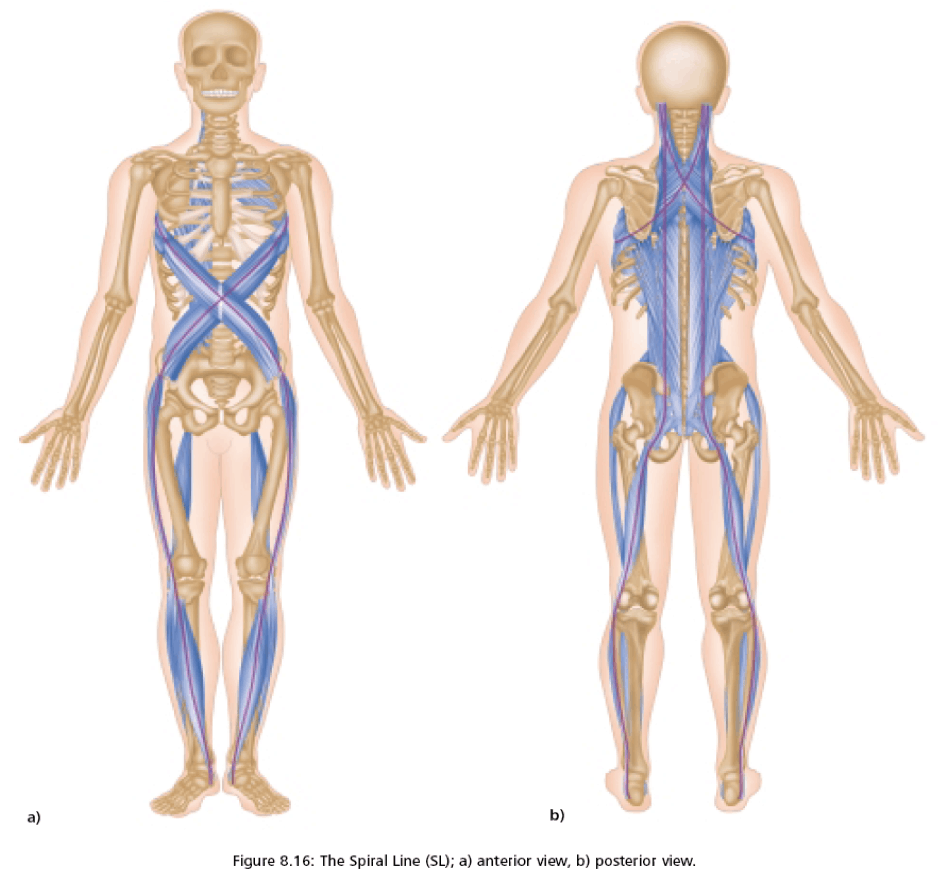
What Is Fascia?
Fascia is the 3-dimensional matrix that wraps, suspends, separates and connects everything in the body. Without fascia, we would simply be a jelly-like mass with no structure.
Key characteristics:
- Densely packed with proprioceptors
- Highly responsive to mechanical loading
- Critical for movement efficiency and injury prevention
To build a resilient, sensitive fascial network, you must move — and move with variety.
Tips for Increasing Fascial Sensitivity
1. Train Whole-Body Movements
Movements that engage long fascial chains enhance communication through the system. This improves efficiency and the timing of muscular activation.
2. Add Variety
Change:
- Load
- Tempo
- Range
- Planes of movement
This improves tissue resilience by altering force vectors and building shape stability.
3. Embrace Elastic Recoil
To get the most out of fascia training:
- Allow counter-movements
- Use natural bounce
- Move with rhythm
- Avoid muscling through or using abrupt, jerky motions
Fascia thrives on flow, not force.
Be Patient — Fascia Takes Time to Adapt
Fascial tissue remodels slowly — over 6 to 24 months.
Progress gradually and always bring mindfulness to your movement.
Given that most soft-tissue injuries occur within connective tissue, investing time in fascial training is incredibly worthwhile.
This doesn’t mean abandoning traditional training, but rather integrating fascial strategies to support your goals, needs and preferences.
Interested in Learning More?
Consider exploring education from the Institute of Motion (IOM) or functional training courses that enhance your understanding of movement, fascia and performance.